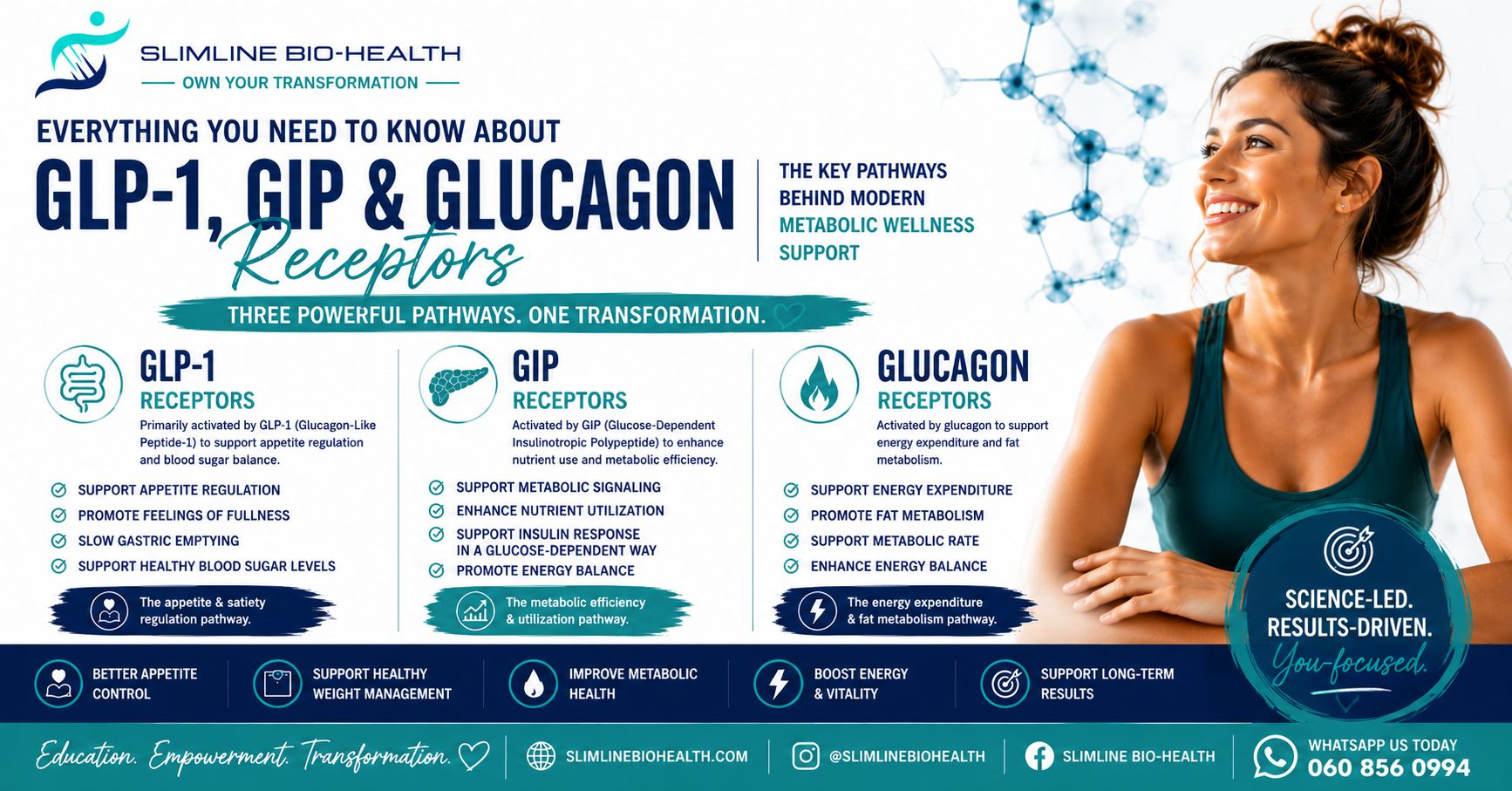
Everything You Need To Know About GLP-1, GIP & Glucagon Receptors
Understanding The Science Behind Modern Metabolic Wellness Support
As metabolic wellness support continues to evolve, more people are hearing terms such as:
- GLP-1 receptors
- GIP receptors
- Glucagon receptors
These receptor systems are central to many of the wellness-support discussions surrounding modern peptide-based transformation strategies.
At Slimline Bio-Health, we believe education matters. Understanding how these pathways work can help individuals better understand appetite regulation, metabolic wellness, and sustainable transformation support.
What Are Receptors?
Receptors are specialized structures in the body that receive and respond to signals.
You can think of them like communication points that help regulate important functions such as:
- appetite
- digestion
- metabolism
- energy usage
- blood sugar balance
- fullness signals
Different compounds and hormones interact with different receptors throughout the body.
What Are GLP-1 Receptors?
GLP-1 stands for:
Glucagon-Like Peptide-1
GLP-1 receptors play an important role in:
- appetite regulation
- feelings of fullness
- digestion speed
- blood sugar regulation support
This is one reason GLP-1-based wellness support has gained so much attention in recent years.
Many people exploring GLP-1 support are looking for help with:
- portion control
- reducing cravings
- consistency with healthier eating habits
- long-term wellness support
What Are GIP Receptors?
GIP stands for:
Glucose-Dependent Insulinotropic Polypeptide
GIP receptors are involved in:
- metabolic signaling
- nutrient utilization
- energy balance
- insulin-related support pathways
Modern dual-action wellness support approaches often combine GLP-1 and GIP receptor activity to support multiple metabolic pathways simultaneously.
This dual-pathway approach is part of why compounds such as Tirzepatide have gained significant attention.
What Are Glucagon Receptors?
Glucagon receptors are associated with:
- energy expenditure
- metabolic activity
- fat metabolism support
- energy balance
This pathway has become especially important in discussions around newer triple-action approaches such as Retatrutide.
Researchers and wellness professionals are exploring how combining:
- GLP-1
- GIP
- Glucagon pathways
may support broader metabolic wellness strategies.
Why Do These Receptors Matter?
Many people struggle with:
- constant hunger
- cravings
- emotional eating
- low energy
- inconsistent eating habits
- difficulty maintaining long-term transformation
Modern metabolic wellness support aims to help support the body’s natural signaling systems involved in appetite regulation and metabolic function.
These receptor pathways are central to those discussions.
Triple-Action Support Explained
Some newer wellness-support approaches are designed to work across multiple pathways at once.
For example:
- GLP-1 support focuses primarily on appetite and fullness
- GLP-1 + GIP dual-action support expands metabolic signaling
- GLP-1 + GIP + Glucagon triple-action support aims to broaden metabolic wellness pathways even further
This is why compounds such as Retatrutide are generating significant interest in modern wellness discussions.
Lifestyle Still Matters Most
No wellness-support approach replaces healthy living.
Long-term transformation still depends on:
- nutrition
- hydration
- movement
- sleep
- consistency
- stress management
- sustainable habits
The strongest long-term results typically come from combining education, healthier habits, and structured wellness support.
Fiber & Nutrition Matter More Than Most People Realize
One of the most overlooked areas of metabolic wellness is fiber intake and nutritional quality.
Fiber may help support:
- fullness
- digestive health
- appetite consistency
- healthier eating patterns
- blood sugar balance
Simple whole-food strategies can make a significant difference over time.
Final Thoughts
GLP-1, GIP, and Glucagon receptors are becoming increasingly important in conversations surrounding modern metabolic wellness and sustainable transformation support.
Understanding these pathways helps people better understand how modern wellness-support strategies are evolving.
At Slimline Bio-Health, our focus remains on science-led wellness education, responsible support strategies, and helping individuals build sustainable long-term health habits.