Understanding Growth Hormone
The Master Recovery & Regeneration Hormone
Growth Hormone (GH) is one of the most important signaling hormones in the human body.
While many people associate Growth Hormone only with muscle growth, its role extends far beyond the gym.
Growth Hormone plays an important role in recovery, tissue repair, body composition, energy, vitality, and healthy aging.
Understanding how Growth Hormone works can help individuals make informed decisions regarding their long-term wellness and transformation goals.
What Is Growth Hormone?
Growth Hormone is naturally produced by the pituitary gland, a small gland located at the base of the brain.
GH is released in pulses throughout the day, with some of the largest releases occurring during deep sleep.
Growth Hormone helps regulate a variety of biological processes including:
- Tissue repair
- Recovery
- Protein synthesis
- Body composition
- Metabolism
- Physical performance
- Healthy aging processes
Growth Hormone is essential throughout life, not only during childhood development.
Why Is Growth Hormone Important?
Growth Hormone acts as one of the body's primary recovery and regeneration signals.
Healthy GH activity helps support:
Recovery
Supporting recovery from training, exercise, and daily physical stress.
Lean Muscle Maintenance
Helping support healthy muscle tissue and physical performance.
Fat Metabolism
Supporting the body's ability to utilize stored energy.
Tissue Repair
Supporting normal repair and regeneration processes.
Energy & Vitality
Helping maintain physical performance and overall wellness.
Healthy Aging
Supporting long-term wellness, recovery, and physical function as we age.
What Happens As Growth Hormone Declines?
Growth Hormone production naturally declines with age.
This gradual reduction may contribute to:
- Slower recovery
- Reduced exercise capacity
- Increased body fat accumulation
- Reduced lean muscle mass
- Lower energy levels
- Changes in skin quality
- Reduced physical resilience
While aging is natural, many individuals seek ways to support healthy GH activity as part of their wellness strategy.
The GH–IGF-1 Connection
One of the most important concepts to understand is the relationship between Growth Hormone and IGF-1.
IGF-1 stands for:
Insulin-Like Growth Factor-1
When Growth Hormone is released, it signals the liver and other tissues to produce IGF-1.
Together, GH and IGF-1 help regulate:
- Recovery
- Tissue maintenance
- Muscle support
- Body composition
- Physical performance
This partnership is one reason Growth Hormone is often discussed in wellness and healthy aging circles.
Growth Hormone & Recovery
Recovery is one of the most valuable functions associated with Growth Hormone.
GH supports processes involved in:
- Exercise recovery
- Tissue repair
- Physical resilience
- Recovery from daily wear and tear
- Overall wellness support
This is one reason recovery-focused individuals often pay close attention to sleep, nutrition, and GH-support strategies.
Growth Hormone & Body Composition
Growth Hormone is often associated with body composition support.
When combined with:
- Resistance training
- Proper nutrition
- Protein intake
- Quality sleep
- Consistent lifestyle habits
GH activity may help support:
- Lean muscle maintenance
- Metabolic function
- Healthy body composition goals
No hormone or peptide replaces healthy living, but supporting natural biological processes may contribute to long-term success.
Growth Hormone & Healthy Aging
As interest in healthy aging continues to grow, so has interest in Growth Hormone support.
Healthy GH activity may help support:
- Recovery
- Vitality
- Physical performance
- Skin quality
- Tissue maintenance
- Long-term wellness
The goal is not to stop aging but to support healthy function and quality of life throughout the aging process.
How Can You Support Natural Growth Hormone Production?
Many natural lifestyle habits help support healthy GH activity.
Prioritize Sleep
The largest GH pulses occur during deep sleep.
Improving sleep quality may be one of the most powerful ways to support natural Growth Hormone production.
Exercise Regularly
Resistance training and physical activity support many of the body's recovery pathways.
Eat Enough Protein
Protein provides the building blocks required for tissue maintenance and recovery.
Manage Stress
Chronic stress can negatively impact recovery systems and overall wellness.
Stay Consistent
Long-term lifestyle habits often produce the most meaningful results.
What About GH-Support Peptides?
Modern wellness discussions often include peptides that support Growth Hormone signaling pathways.
Some of the most discussed include:
- CJC-1295
- Ipamorelin
- Tesamorelin
- GHRP-6
These compounds are often explored for their potential role in supporting Growth Hormone-related pathways and recovery-focused wellness strategies.
The Growth Matrix Approach
At Slimline Bio-Health, one of the most popular GH-support options is:
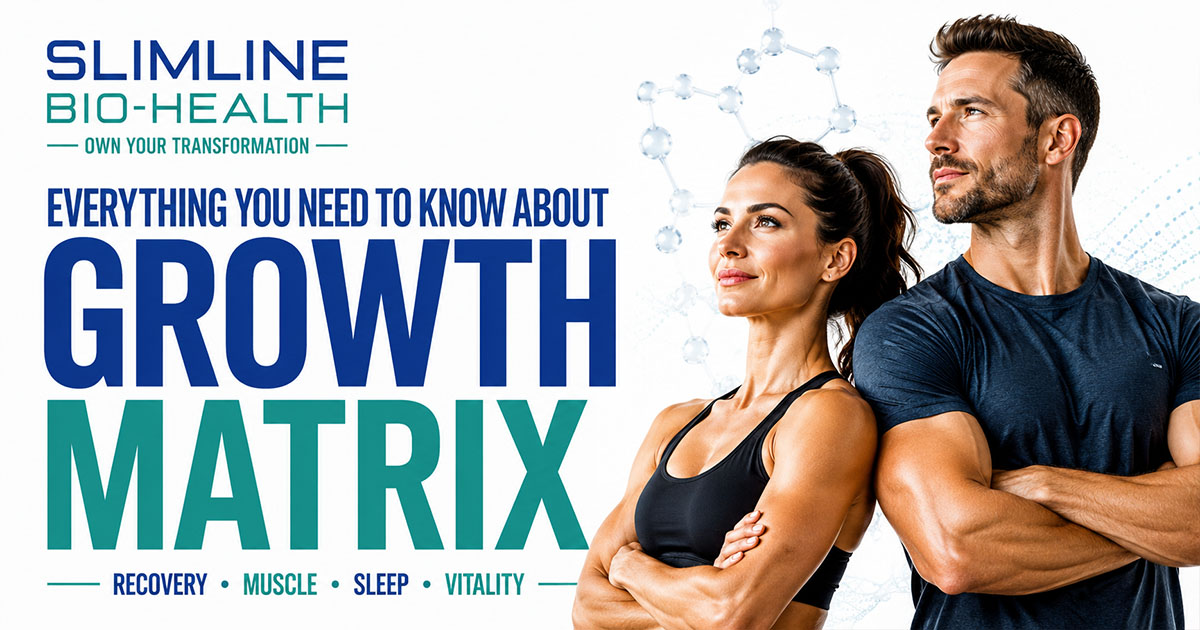
Noventra CJC/Ipamorelin/Tesamorelin Hybrid Pen - Growth Matrix 12mg
Growth Matrix combines multiple GH-support pathways into a single wellness-support strategy.
Individuals often explore Growth Matrix for support in areas such as:
- Recovery
- Sleep support
- Healthy aging
- Body composition
- Exercise recovery
- Wellness optimization
- Long-term vitality
As with all wellness-support strategies, results are best supported by proper nutrition, movement, sleep, and consistency.
Final Thoughts
Growth Hormone is far more than a muscle-building hormone.
It is one of the body's most important recovery and regeneration signaling systems.
Understanding how Growth Hormone works can help individuals make informed decisions regarding wellness, recovery, healthy aging, and long-term vitality.
At Slimline Bio-Health, our focus remains on science-led wellness education that empowers people to own their transformation.