GHK-Cu Copper Peptide | Collagen & Skin Support
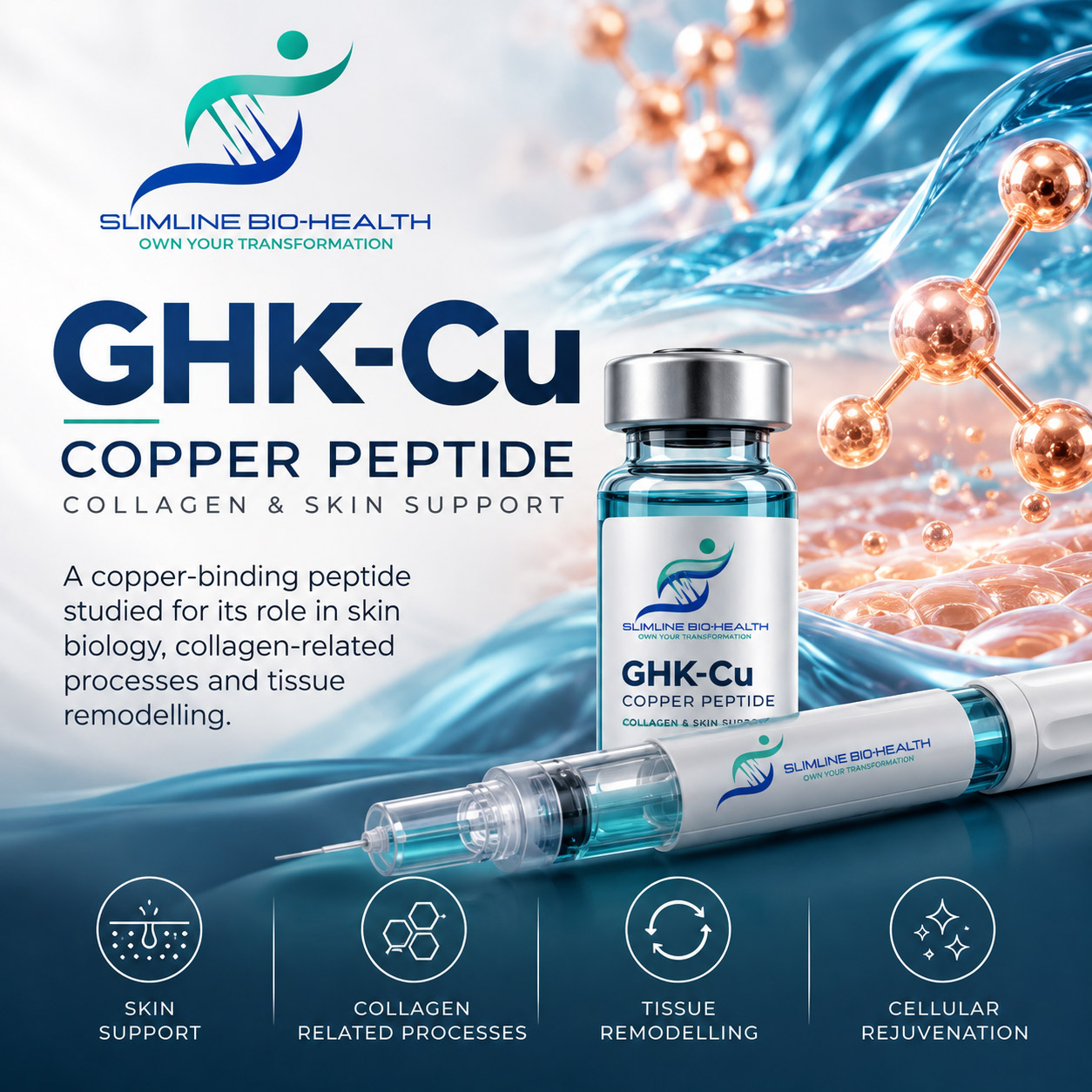
GHK-Cu is a copper-binding peptide studied for its role in skin biology, collagen-related processes and tissue remodelling. Also known as copper peptide, GHK-Cu has attracted research interest for its interactions with pathways involved in extracellular matrix maintenance, skin appearance and tissue repair.
Available in pen and vial formats.
Price range: R700,00 through R750,00
GHK-Cu — Copper Peptide
What Is GHK-Cu?
GHK-Cu is a naturally occurring copper-binding peptide composed of three amino acids: glycine, histidine and lysine. It can bind copper ions, forming a complex studied for its involvement in biological processes associated with skin maintenance, collagen-related activity and tissue remodelling.
Often referred to as a copper peptide, GHK-Cu has received scientific interest because of its relationship with the extracellular matrix — the structural network of proteins and other components that helps support skin and connective tissue.
GHK-Cu and Collagen
Collagen is a structural protein that contributes to the strength, firmness and organisation of skin and connective tissue. Research into GHK-Cu has examined its relationship with collagen-related pathways and the wider processes involved in maintaining the extracellular matrix.
These areas of research have made copper peptides a subject of interest in skin science and cosmetic research. However, research findings do not guarantee that a particular GHK-Cu product will increase collagen, improve skin firmness or produce a visible result.
Areas of Scientific Interest
Skin Structure and Appearance
GHK-Cu has been studied in relation to skin biology and the processes that influence skin structure and appearance. Research interest includes extracellular matrix maintenance and the biological pathways associated with skin remodelling.
Collagen-Related Processes
Collagen provides structural support throughout the skin and connective tissue. GHK-Cu research has explored pathways associated with collagen and other extracellular matrix components, although outcomes can vary according to the formulation, application method and study conditions.
Tissue Remodelling
GHK-Cu has been investigated in laboratory and preclinical research involving tissue remodelling and repair-related processes. These findings provide scientific context but do not establish that every formulation is effective or appropriate for human use.
Copper-Dependent Biology
Copper is an essential trace element involved in several biological processes. GHK-Cu’s ability to bind copper is central to its biological interest, but the effects of a copper-peptide complex depend on factors such as formulation, delivery and exposure.
Available Formats
GHK-Cu is offered in pen and vial formats within this product listing. The exact strength, presentation and product specifications depend on the selected variation.
Always check the selected option and its supplied product information before making a purchase.
Important Information
Scientific interest in GHK-Cu does not establish the safety or effectiveness of every product, concentration or delivery method. Evidence from laboratory research or topical cosmetic studies cannot automatically be applied to injectable products.
Use only in accordance with the product’s verified instructions and appropriate professional guidance. Do not assume that different formats are interchangeable.
What is GHK-Cu?
GHK-Cu is a copper-binding tripeptide made up of glycine, histidine and lysine. It is studied for its relationship with skin biology, collagen-related pathways and tissue remodelling.
Why is GHK-Cu called a copper peptide?
GHK-Cu binds copper ions, forming a copper-peptide complex. This copper-binding property is an important part of its biological and scientific interest.
What is the connection between GHK-Cu and collagen?
Research has examined GHK-Cu in relation to collagen-associated pathways and the extracellular matrix, which provides structural support to skin and connective tissue. Research interest does not guarantee a specific collagen-related outcome from a particular product.
Is GHK-Cu available in pens and vials?
Yes. This product listing brings pen and vial options together. Check the selected variation for its exact strength, format and product specifications.
Are all GHK-Cu formats interchangeable?
No. Products may differ in concentration, formulation, delivery method and instructions. Do not assume that one format can be used in the same way as another.
Is GHK-Cu proven to improve skin or increase collagen?
Evidence varies by application and study type. Laboratory findings and limited studies do not establish that every formulation will produce visible skin improvements or increase collagen in humans.
Is GHK-Cu suitable for everyone?
Suitability depends on the specific product, route of administration, individual circumstances and available safety information. Seek guidance from a suitably qualified healthcare professional, particularly before considering an injectable product.
| Brand | Noventra — GHK-Cu Recovery & Repair Pen 50 mg, AndroPharm Peptides — GHK-Cu 50 mg / 3 mL Vial, Nortech — GHK-Cu 50 mg / 2 mL Vial, Celltech — GHK-Cu Pen |
|---|