Common Myths About Peptides
Separating Facts From Fiction
As peptides continue to gain attention in the wellness, recovery, healthy aging, and metabolic wellness spaces, misinformation has grown alongside interest.
Many people hear the word "peptide" and immediately make assumptions based on social media posts, marketing claims, or outdated information. Unfortunately, this can create confusion and make it difficult for individuals to make informed decisions.
Let's explore some of the most common myths about peptides and separate fact from fiction.
Myth #1: Peptides Are Steroids
This is one of the most common misconceptions.
Peptides are not steroids.
While both are used in wellness and medical settings, they function through completely different mechanisms.
Peptides are short chains of amino acids that act as signaling molecules within the body. Their primary role is to communicate instructions to cells and support specific biological processes.
Steroids, on the other hand, are hormone-based compounds that influence entirely different biological systems.
Simply put:
- Peptides communicate signals
- Steroids alter hormone pathways
Although they may sometimes be discussed in similar circles, they are fundamentally different compounds with different purposes and mechanisms of action.
Myth #2: Peptides Are Magic
Peptides are powerful tools, but they are not miracles.
No peptide can replace:
- Healthy eating
- Regular exercise
- Quality sleep
- Proper hydration
- Stress management
- Consistent lifestyle habits
Sustainable transformation is always built on a foundation of healthy habits.
Peptides may help support specific goals, but they work best when combined with a well-structured wellness strategy.
The most successful long-term transformations occur when science-supported tools are paired with consistent lifestyle choices.
Myth #3: More Is Better
Many people assume that increasing the dose will automatically increase results.
This is not always true.
Peptides often work more like switches than fuel.
Once a signaling pathway has been activated, increasing the amount may not necessarily create a stronger effect. In some cases, higher doses may simply increase the likelihood of side effects without improving outcomes.
This is why responsible dosing strategies and proper guidance are important.
With peptides, more is not always better.
The goal is often finding the right dose rather than the highest dose.
Myth #4: All Peptides Do The Same Thing
Not all peptides serve the same purpose.
Every peptide has a unique role and mechanism of action.
For example:
Appetite Regulation Peptides
May support fullness, appetite control, and healthier eating habits.
Recovery Peptides
May support tissue repair, recovery, and rehabilitation strategies.
Skin & Healthy Aging Peptides
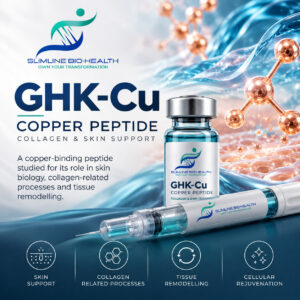
May support collagen production, skin quality, and wellness-focused aging strategies.
Growth Hormone Support Peptides
May support recovery, body composition goals, and overall wellness strategies.
Understanding the specific purpose of each peptide is essential for making informed decisions and setting realistic expectations.
Myth #5: Peptides Deliver Instant Results
Many people expect dramatic changes within days.
The reality is that most peptides work gradually.
Just as healthy eating and exercise require consistency, peptide-supported wellness strategies often take time before noticeable changes occur.
Patience, consistency, and realistic expectations are important components of any successful wellness journey.
Sustainable results are usually built over weeks and months, not overnight.
Myth #6: If It's Natural, It Has No Risks
Another common misconception is that peptides are completely risk-free.
While many peptides are designed to mimic naturally occurring signaling molecules in the body, that does not mean they should be used carelessly.
Proper education, responsible dosing, quality sourcing, and professional guidance remain important.
Understanding both potential benefits and limitations helps individuals make informed decisions and support safer outcomes.
Education Matters
One of the biggest mistakes people make is assuming all peptides are interchangeable.
The reality is that peptides are highly specialized tools designed to support different biological pathways.
The more you understand about how they work, the better equipped you are to make informed decisions regarding your wellness journey.
Education remains one of the most important factors in achieving safe, sustainable, and successful long-term results.
Final Thoughts
Peptides continue to be one of the most exciting areas of modern wellness and health optimization.
However, separating facts from myths is essential.
Remember:
- Peptides are not steroids.
- Peptides are not magic.
- More is not always better.
- Not all peptides do the same thing.
- Results take time.
- Natural does not mean risk-free.
The most effective approach combines education, realistic expectations, healthy lifestyle habits, and science-led decision making.
At Slimline Bio-Health, our mission is to provide evidence-based wellness education that empowers individuals to own their transformation.
CTA Section
Ready To Learn More?
Whether you're exploring peptides for metabolic wellness, recovery, healthy aging, or transformation support, education should always come first.
📲 WhatsApp us today: 0608560994
Own Your Transformation.
Showing 1–4 of 9 results